 Pajarito Farms
History
The oldest wine region in America is right here
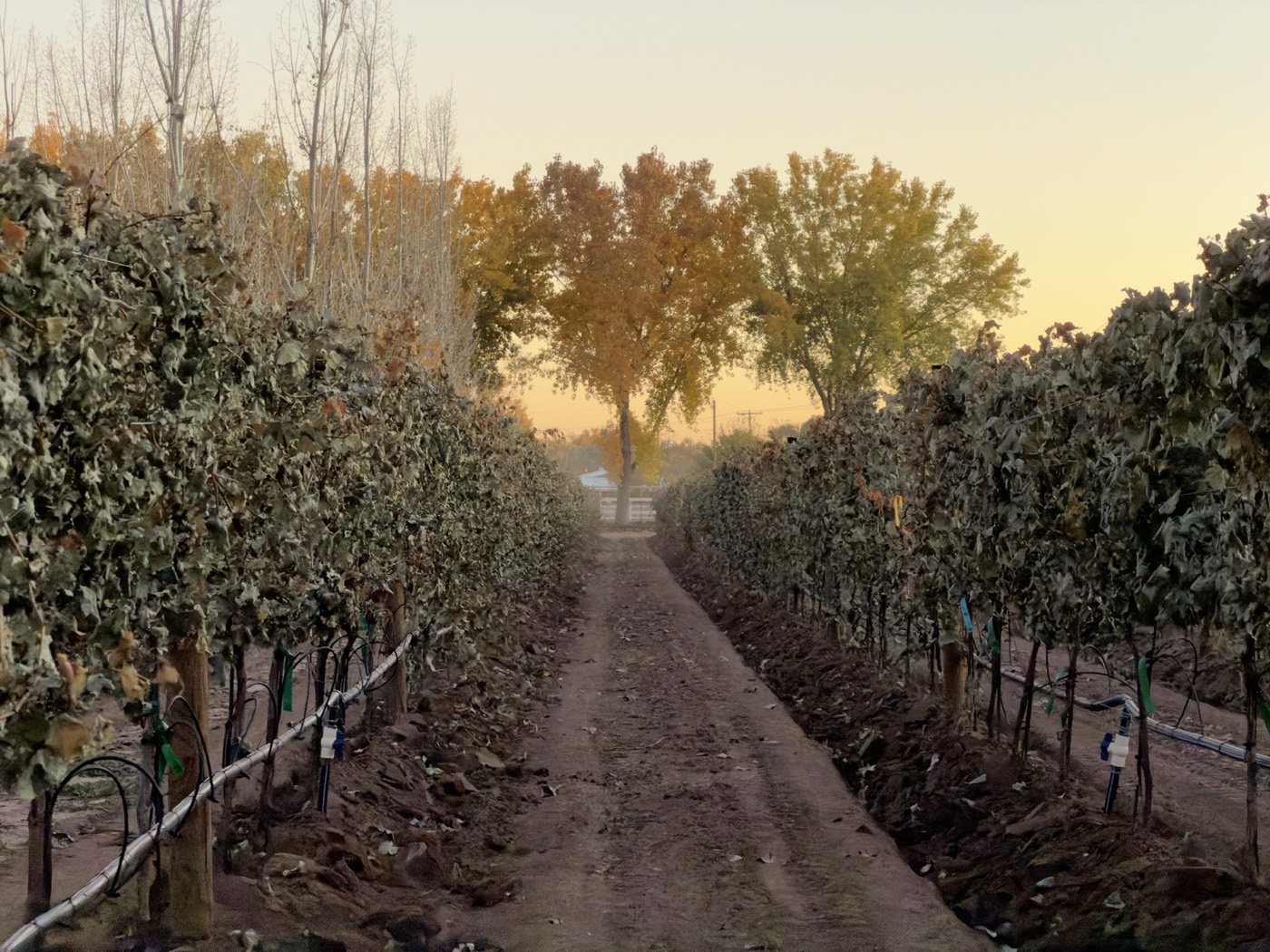
When people hear there's a vineyard in Albuquerque, the polite response is usually some version of "really?" Fair enough. But here's the part most people don't know: New Mexico is the oldest wine-growing region in what's now the United States.
The story starts with a crime, technically. Spanish law barred exporting grapevines from Spain — the crown wanted its colonies buying Spanish wine, not making their own. The Franciscan missionaries along the Rio Grande had a problem with that: Mass requires wine, and the nearest supply was months away by wagon. So cuttings were smuggled into the New World anyway, and the Mission grape worked its way north through Mexico. By 1629, two friars — commonly credited as Fray García de Zúñiga and Antonio de Arteaga — had carried vines up the Camino Real and planted them at Senecú, a Piro pueblo south of present-day Socorro. The variety was the Mission grape, and it's still grown in New Mexico today.
That's roughly 140 years before California's mission vineyards. Let the record show who got here first.
It wasn't a novelty then, either. Vineyards eventually ran the river valley from Bernalillo down past Las Cruces, and by 1880 the territory was producing over 900,000 gallons a year — fifth in the nation, with twice the grapevine acreage of New York. What ended it wasn't the climate. It was Rio Grande flooding and Prohibition, which between them wiped out most of the industry until small wineries started the revival in the late 1970s.
So when we put vines in the ground here, we're not asking whether wine grapes can grow in the middle Rio Grande valley. That question was answered almost four centuries ago, by people with far worse irrigation equipment. We're just the latest hands on a very old row.